Build Hardware with AI
Checks, tools and skills that let an AI agent research, design, verify and order real hardware
Abstract
AI agents can now draw a circuit board or a 3D-printed case in minutes. The hard part is knowing whether it will work when it arrives: whether the walls are thick enough for the printer, whether the lid fits, whether the screw is long enough, whether the Gerber files the factory receives really match the schematic. Each mistake costs an order and two weeks.
build-hardware-with-ai gives an agent the checks an experienced engineer runs before ordering. It ships as a Python command-line tool (hwkit), an MCP server with 40 tools that any MCP client can call (Claude Code, Codex, Cursor and others), and a Claude Code plugin with seven guides covering PCBs, printed parts, hand assembly, sourcing, simulation and optical instruments. Each check reports PASS, WARN or FAIL with the numbers behind it, and each limit cites the manufacturer's published rule. The rules came from building real hardware with an agent and writing down every mistake made along the way.
What it checks
- 3D printing: measured wall thickness against JLC3DP's limit for the part's size, trapped resin or powder, build volume, supports, tolerance and mass, for SLA, MJF, SLS, SLM metal and FDM.
- Mechanics: exact overlap and gap between parts, sweeps of moving parts over their whole travel, a straight tool path to every screw, and screw stacks with ISO length tolerances.
- Circuit boards: KiCad's design-rule check with JLCPCB's limits, Gerber files rebuilt into copper and compared with the schematic, BOM and placement files, stencil area ratios, a review by kicad-happy and routing by KiCadRoutingTools.
- Research and parts: paper search (OpenAlex, arXiv), datasheet download and search, and live prices from LCSC, Mouser and DigiKey with the source and date on every number.
- Optics: Gaussian beams through lens trains, objective back apertures and fill, focal spots, drag near a wall, Mie scattering, and stiffness calibration from thermal motion.
- Heavy jobs: simulations and routing run in a queue, one at a time, with a memory cap.
Results
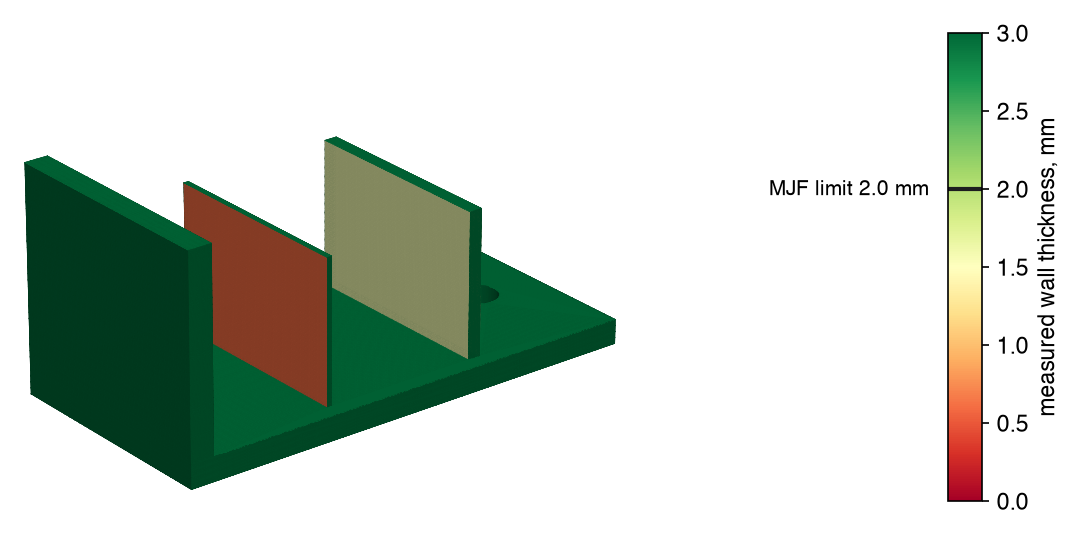
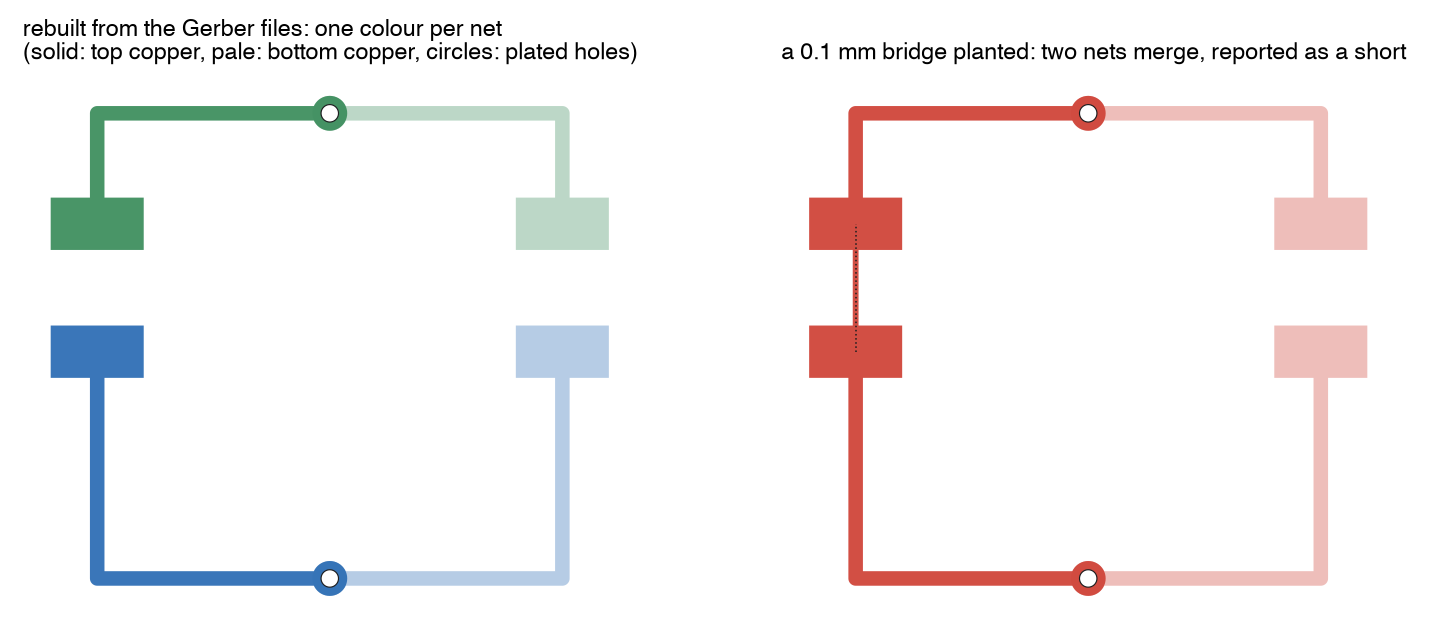
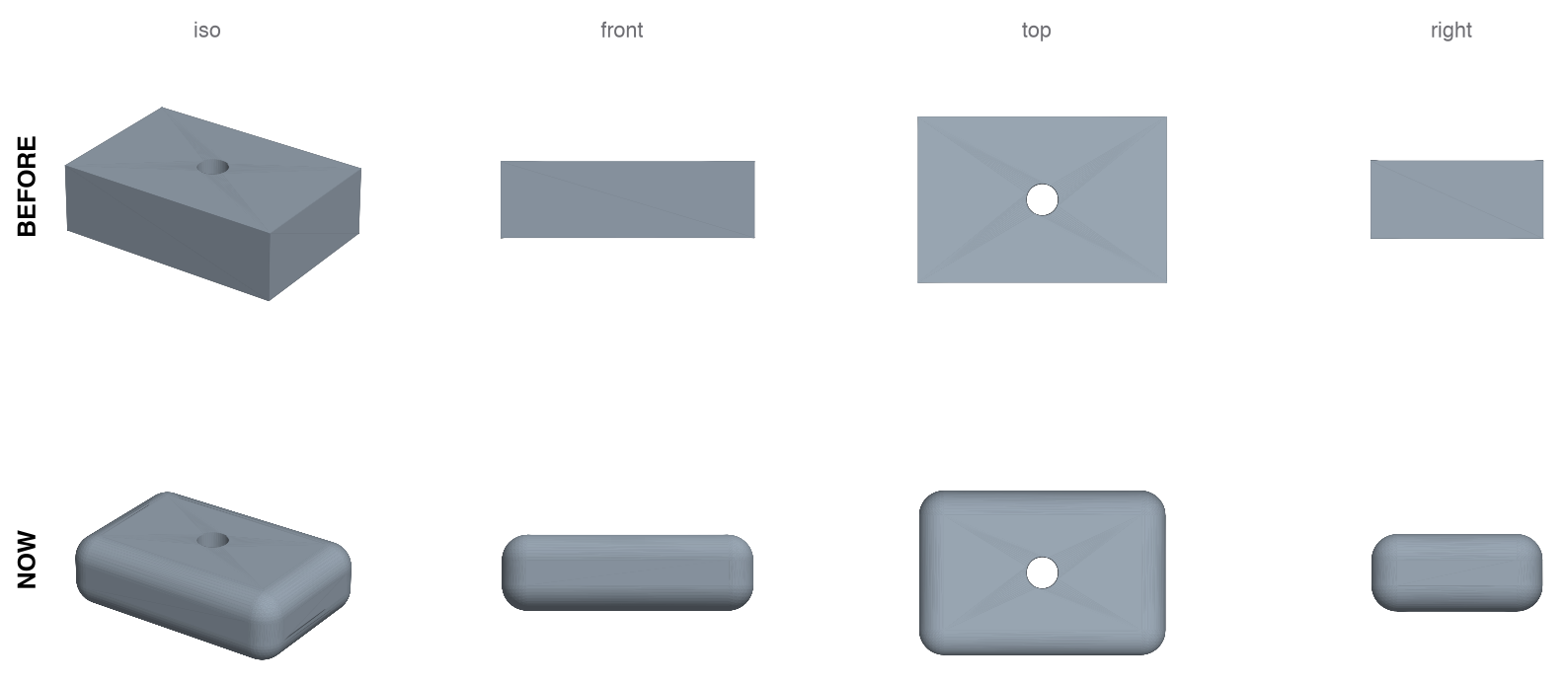
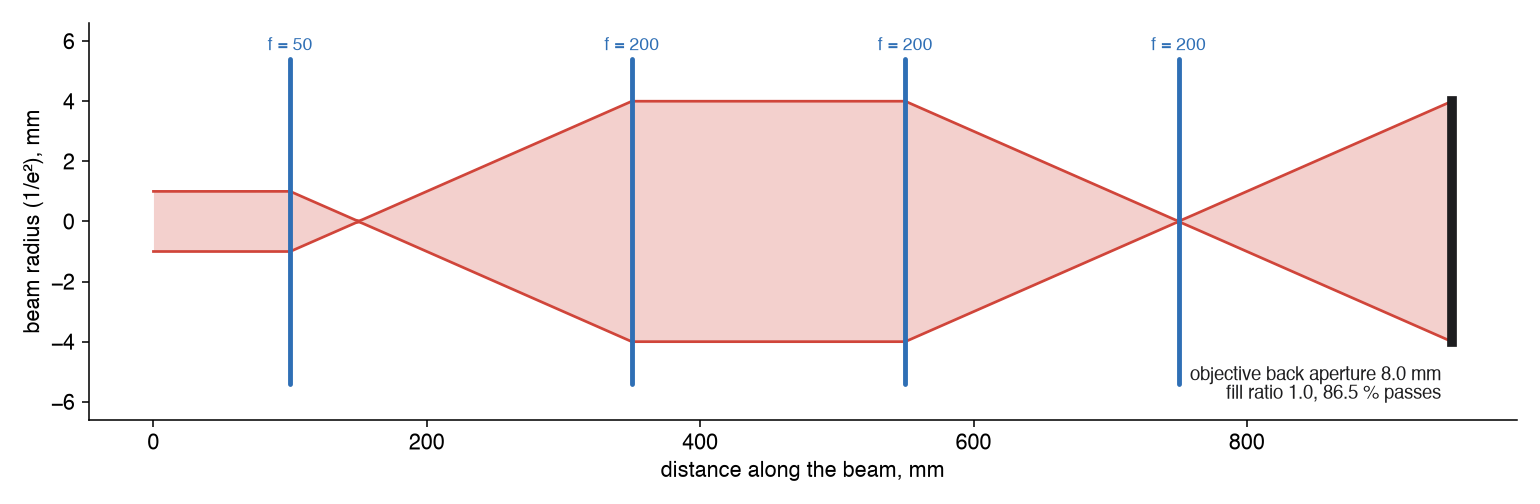
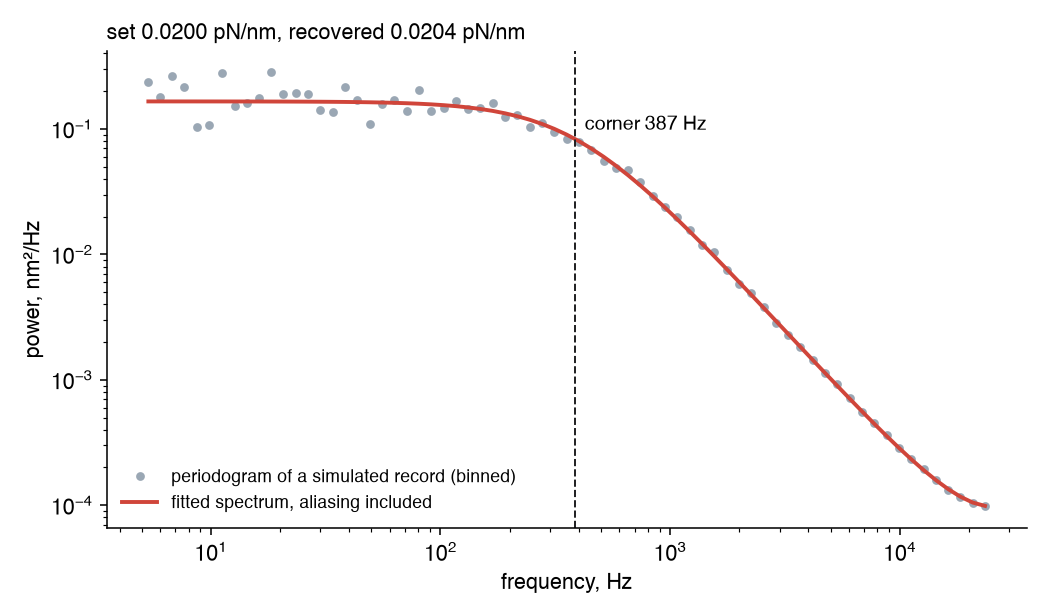
Every check is tested against a known answer: a 0.3 mm gap measures 0.300 mm, a removed via is reported as an open, and a lens focuses a beam to λf/πw. The tests run on macOS and Ubuntu with Python 3.11 to 3.13.
The acoustic replicator
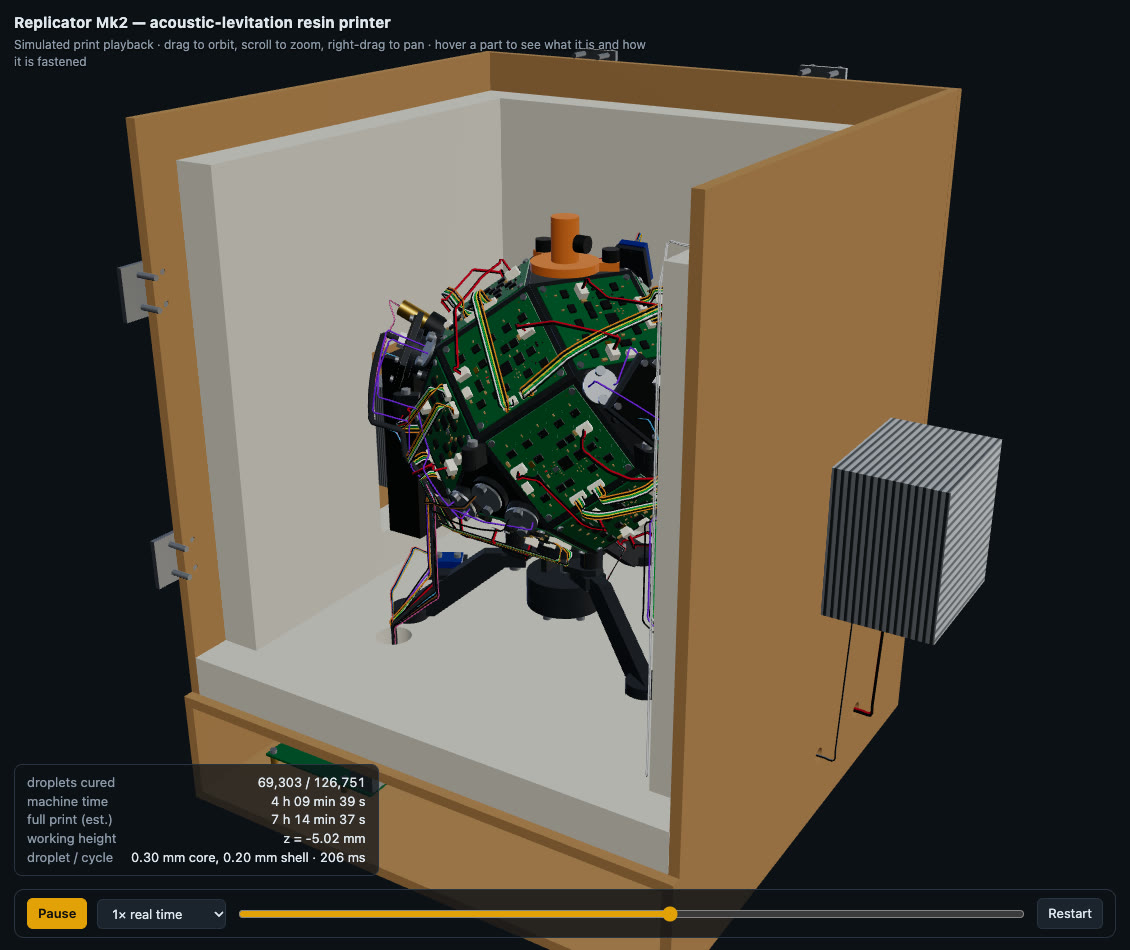
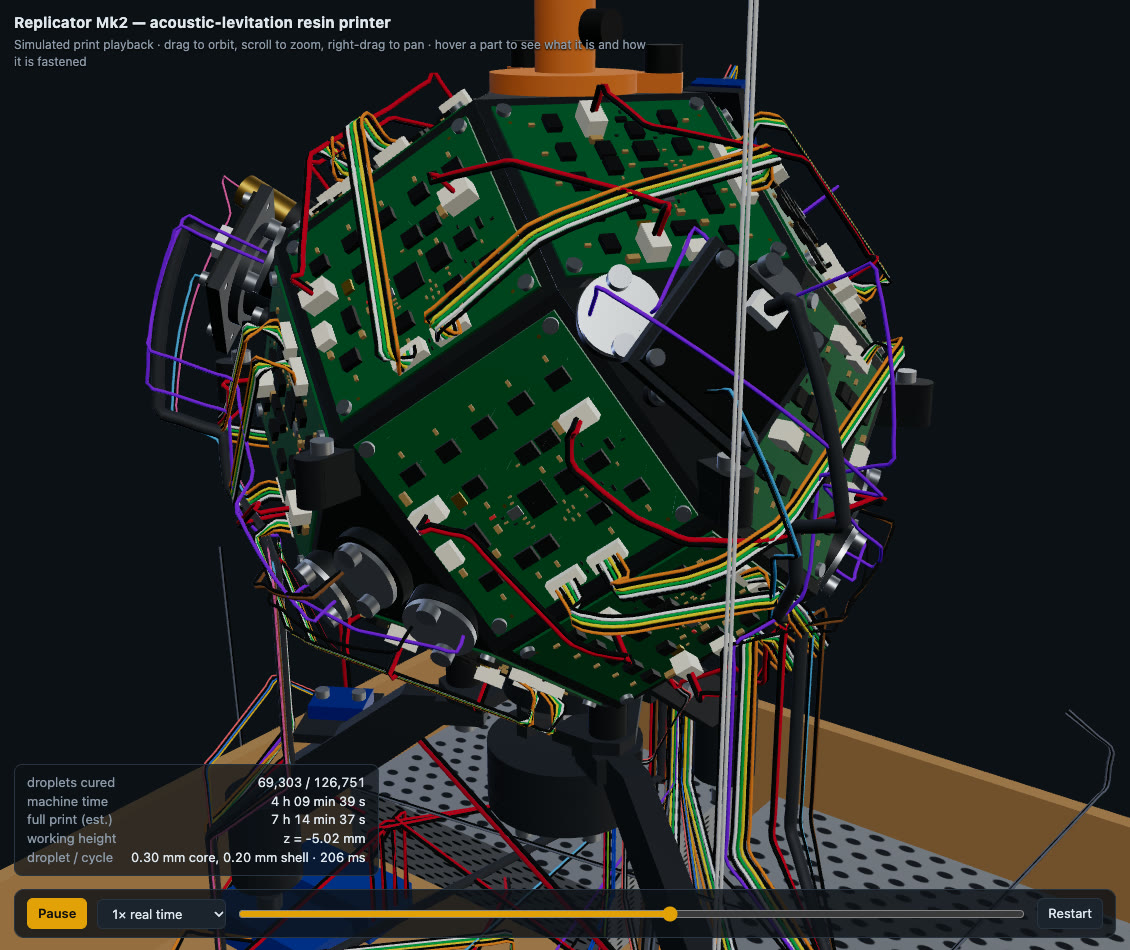
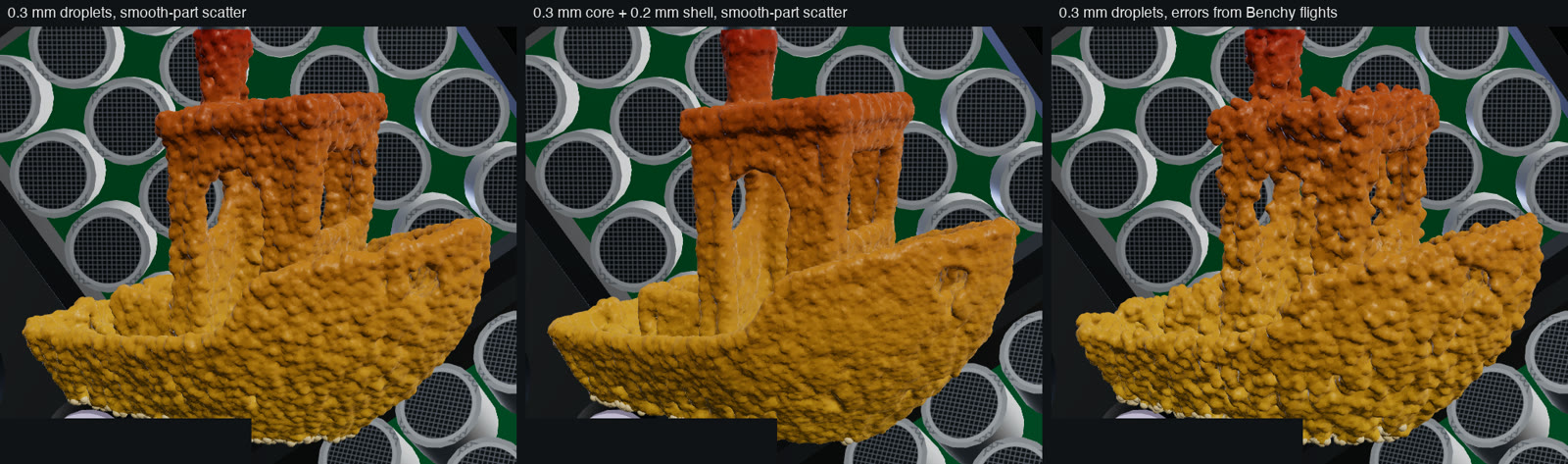
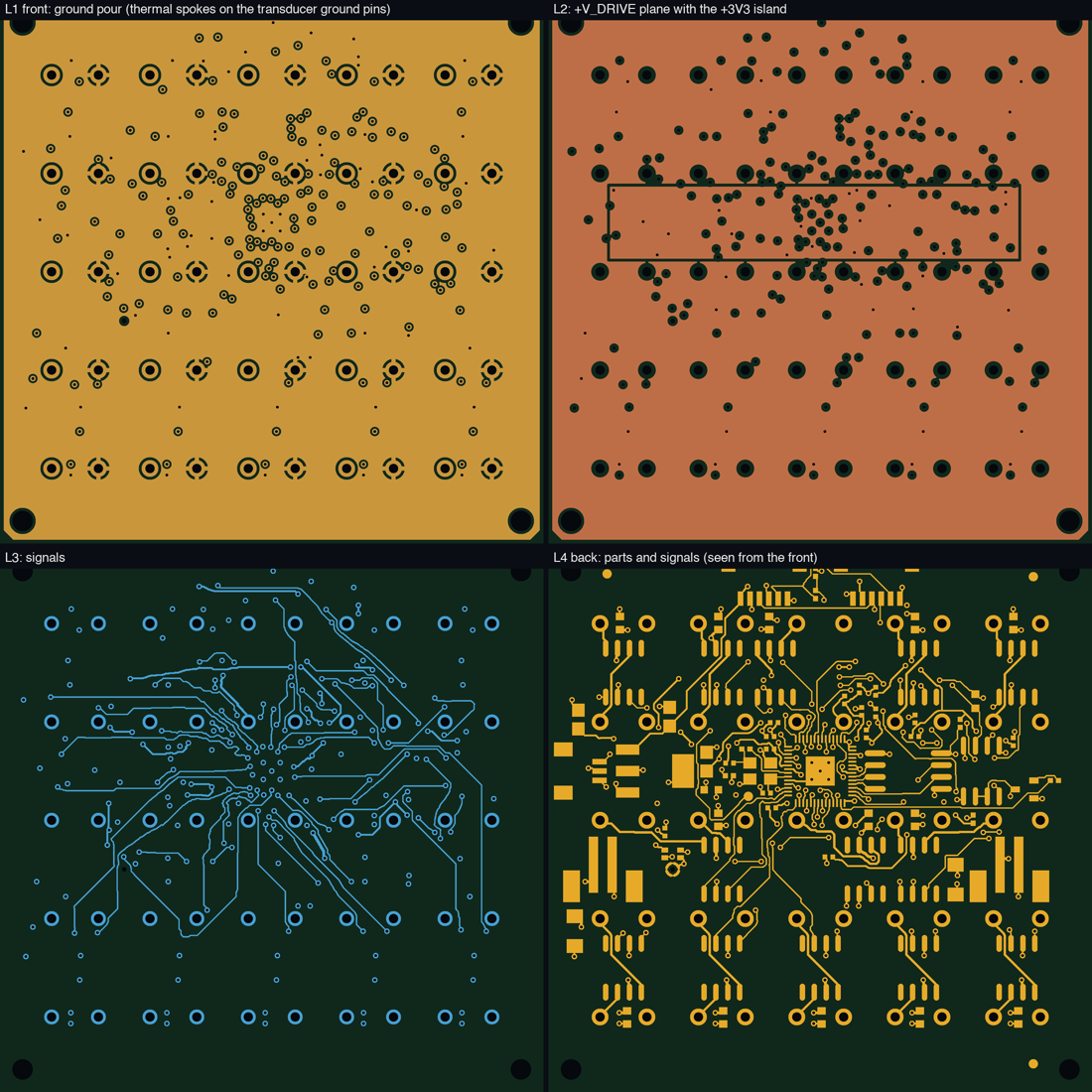
The acoustic replicator is a 3D printer that carries droplets of UV resin through the air with a 40 kHz ultrasonic phased array and cures them one at a time onto a part hanging on a pin. The study covers the physics, the full hardware design (printed frame, every bought part, screw and wire) and a routed transducer board ready for JLCPCB.
Repositories
This toolkit: the CLI, the 40-tool MCP server, the Claude Code plugin and its guides.
The acoustic-levitation printer study: physics simulation, hardware model, routed board and report.
Agent skills for KiCad: schematic analysis, PCB review, EMC pre-compliance, SPICE. The kit runs its review and re-measures its keepout findings.
Python and Rust tools for routing KiCad boards. The kit runs it as a background job and judges each route with KiCad's rule check.
The open-source PCB suite. kicad-cli runs the design-rule checks and writes the fabrication files.
Robust solid geometry. It gives the exact overlap volumes and least gaps behind the fit and sweep checks.
Triangle meshes in Python: loading parts, and the ray casting that measures wall thickness.
Gerber and Excellon parsing, used to rebuild the copper the factory will make.
The official Model Context Protocol SDK that the kit's server is built on.
Install
In Claude Code, add kicad-happy's marketplace first (the plugin depends on it), then this one:
/plugin marketplace add aklofas/kicad-happy
/plugin marketplace add cforcomputer/build-hardware-with-ai
/plugin install build-hardware-with-ai@build-hardware-with-aiFor any other MCP client, the server's command is:
uvx --from git+https://github.com/cforcomputer/build-hardware-with-ai hwkit mcpFor the command-line tool alone:
uv tool install git+https://github.com/cforcomputer/build-hardware-with-aiCite
@software{obrien2026buildhardware,
author = {O'Brien, Patrick},
title = {build-hardware-with-ai: checks, tools and skills
for AI agents that build hardware},
year = {2026},
version = {0.2.1},
license = {MIT},
url = {https://github.com/cforcomputer/build-hardware-with-ai}
}